
Аналитические cookie Яндекс.Метрики и статистики платформы Tilda можно включить или отключить. Они помогают нам видеть статистику посещений и улучшать сайт.

Children and succession
Materials and articles

Children inherit not only assets: what a family passes on without words
Why inheritance begins not with documents, but with how adults make decisions, talk about money, keep their word and show responsibility.

What a child learns about money without your words
How attitudes towards work, risk, wealth, duty, choice and responsibility are conveyed to children through the behavior of adults, and not through lectures.

Track of child development and family maturation: the child already lives inside the capital
Why does a child need not just another course, but a track of growing up within the family: with practice, responsibility, rituals, mentoring and parental participation.
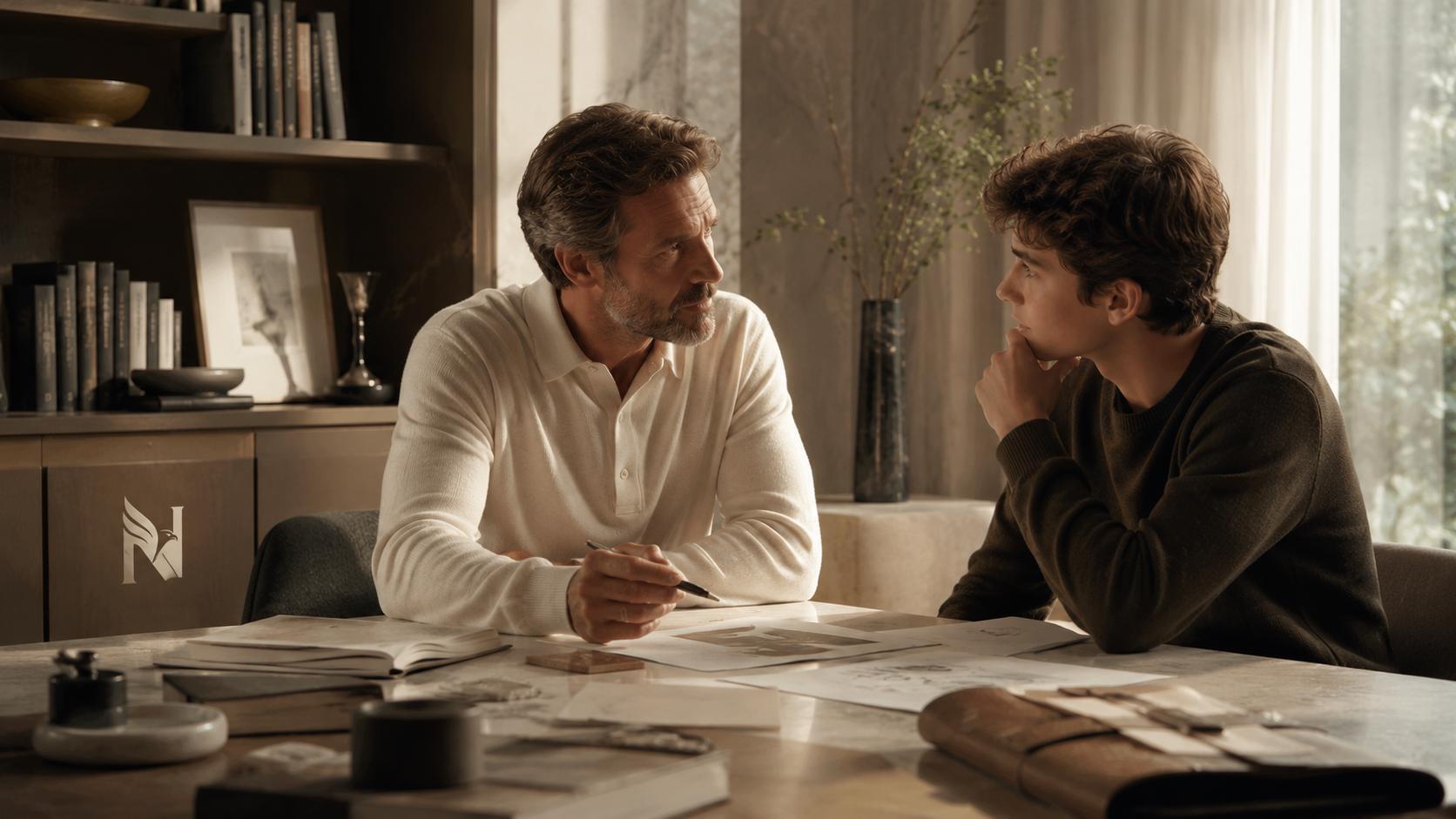
The heir needs to pass on a judgment, not just an account
Why mature judgment is more important than early access to money and how a family prepares an heir for decisions, mistakes and responsibility.

Legacy letter: what a parent should have time to convey to the family
About the Legacy Letter as an artifact of transmission that connects the voice of the parent, the meaning of capital, the trusted circuit and support for the family in a moment of uncertainty.

When comfort prevents you from growing up: children, wealth and inner support
How wealth can strengthen a child or deprive him of internal support if the family does not transfer work, boundaries, responsibility and the right to make mistakes.

Heir and successor: why capital cannot simply be transferred
Why inheritance of assets is not the same as succession, and how a family loses control if it transfers rights but does not develop a role.

He protected them from capital. He thought it was love
Why silence about capital often looks like protection, but deprives heirs of an adult place next to decisions.
Analytical cookies from Yandex Metrica can be enabled or disabled.
